- How mountain of debt is ‘grounding’ Nigeria’s aviation
- Lagos light rail to connect MMIA directly to Marina, city center, FAAN, CCECC mark landside concrete work completion
- IATA urges global support for CORSIA as aviation carbon scheme hits 10-year mark
- Etihad Airways, Ibom Air ink interline deal connecting Nigeria, Etihad's network
- 67 Years in the Sky: Sanusi Lauds AMCON, urges FG to protect Aero Contractors as "National Treasure"



Sustainable Growth: Dissecting aviation stakeholders’ position on sector’s issues
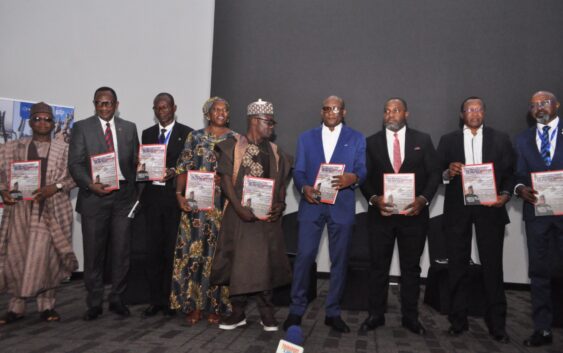
In Nigeria’s aviation industry, a dangerous paradox is playing out: carriers collect ticket fares in Naira, but incur over 70 per cent of their operational costs in US Dollars. Against this brutal macroeconomic backdrop, LAAC’s 30th annual conference became ground zero for an overdue reckoning between state fiscal policy and commercial reality, writes WOLE SHADARE
The League of Airport and Aviation Correspondents (LAAC) hosted its landmark 30th Annual Conference at The Providence Hotel in Ikeja, Lagos, on September 10, 2026.


Focused on the theme, “Towards a Sustainable Aviation Industry: Balancing Government Revenue Demands with Sector Growth,” the summit addressed the acute financial friction points confronting West Africa’s largest civil aviation market.
Chaired by Dr Wale Babalakin, Chairman of Bi-Courtney Aviation Services Limited (BASL), and represented by the Chief Operating Officer of BASL, Mr Remi Jibodu, featuring a keynote address by Air Peace Chairman, Mr Allen Onyema, and attended by the representative of the Minister of Aviation and Aerospace Development, Festus Keyamo (SAN), alongside regulatory chiefs, the summit provided a crucial platform for open debate.
It brought into sharp focus the tension between a government seeking non-oil revenue and a private airline sector struggling against high operating costs, macroeconomic instability, and currency depreciation.
Macroeconomic pressures vs. regulatory demands
The summit’s core issue was the gap between fiscal policy and operational survival. Operating an airline in Nigeria requires managing severe cost mismatches: carriers collect revenue in Nigerian Naira but incur over 70% of their operational expenses, including aircraft leases, insurance premiums, spare parts, and heavy maintenance, in US Dollars.
Operators argued that government agencies, including the Nigeria Civil Aviation Authority (NCAA), Federal Airports Authority of Nigeria (FAAN), and Nigerian Airspace Management Agency (NAMA), often treat the sector as a revenue source rather than an economic catalyst.
Airlines face a complex tax landscape comprising 5% Ticket Sales Charge / Cargo Sales Charge (TSC/CSC) collected on behalf of regulatory agencies, Passenger Service Charges (PSC) levied on every passenger ticket, Terminal Navigation Charges & En-Route Air Navigation Charges assessed per flight segment and Airport Landing and Parking Fees, alongside statutory corporate income and value-added taxes.
Airline operators argued that these overlapping fees inflate ticket prices, suppress passenger demand, and drain cash reserves. In response, government representatives maintained that aviation agencies operate on cost-recovery models.
They noted that revenue collected directly funds critical air navigation safety upgrades, runway maintenance, security infrastructure, and regulatory oversight required to maintain ICAO compliance.
Operators
Lead presenters, including keynote speaker Onyema, framed the current tax environment as an unsustainable burden. Operators highlighted that while airlines operate on narrow profit margins, state agencies levy taxes on gross revenues rather than net earnings.
Operators urged the Ministry of Aviation to intervene by securing concessionary Forex windows through the Central Bank of Nigeria (CBN) and eliminating duplicate charges that increase ticket costs.
Regulators and public agencies
Representatives from the NCAA, FAAN, and NAMA stated that regulatory oversight and infrastructure require steady capital investment.
They cautioned against slashing statutory charges without offering alternative funding sources, warning that underfunding state agencies could compromise air safety equipment, navigation aids, and international safety audits.
Private terminal operators
Chaired by Babalakin (SAN), private operators focused on Public-Private Partnerships (PPPs).
Drawing on experience running Murtala Muhammed Airport Terminal 2 (MMA2), speakers argued that government agencies should focus on regulation rather than commercial terminal operations.
They emphasised that transparent concession frameworks are essential to attract private capital for modernising airport infrastructure.
Central controversies facing the sector
A primary point of discussion was the lack of domestic Maintenance, Repair, and Overhaul (MRO) facilities capable of performing C-Checks and heavy structural inspections on commercial aircraft.
Nigerian airlines spend hundreds of millions of dollars annually ferrying aircraft to Europe, the Middle East, and other parts of Africa for mandatory maintenance.
This capital outflow, combined with FX shortages, leaves aircraft grounded for extended periods while awaiting maintenance slots, directly reducing fleet availability and airline revenue.
Aviation fuel volatility
Jet A1 accounts for over 40% of domestic airline operating expenses in Nigeria. While domestic refining capacity continues to develop, operators remain exposed to import parity pricing, supply chain bottlenecks, and volatile exchange rates.
Tariff disputes and uncollected revenue
A recurring debate involved accumulated debts between airlines and aviation agencies. Agencies frequently cite billions of Naira in unremitted statutory charges owed by domestic carriers.
For years, it had been a friction point: agencies accused airlines of withholding trillions of Naira in collected charges, while airlines countered that inefficient collection systems and brutal operational costs were driving them into the ground.
Airlines counter that these debts stem from disputed billing calculations, service disruptions, and poor airport infrastructure. This circular debt pattern creates friction between operators and regulators.
A representative of the NCAA Director-General laid out the regulatory perspective with calm authority.
He stated that the five per cent TSC/CSC is not an airline tax; it is a pass-through charge paid by the flying public. Looking directly at the row of airline executives, he said, “The agencies rely on these funds for critical safety oversight, airspace navigation, and weather forecasting. When airlines collect this money from passengers and fail to remit it, it stops being a commercial disagreement; it becomes an illegal withholding of public funds.
He defended the NCAA’s push for the automated collection platform, arguing that real-time remittance was the only way to eliminate reconciliation disputes and end the era of endless debt legacy accounts.
The room stirred as the representative for the domestic carriers, representing the Airline Operators of Nigeria (AON), stepped up to respond. The atmosphere immediately tightened.
“We are not revenue collectors for the government,” the AON spokesperson, Prof. Obiora Okonkwo, declared, pitching his voice to reach the back of the hall.
“Airlines are operating in a hostile economic environment. We buy aviation fuel in foreign currency, pay sky-high insurance premiums, and face multiple taxation at every turn. When automation glitches occur or when foreign airlines repatriate funds while local operators suffer, forcing airlines into rigid remittance timelines without resolving billing discrepancies is unfair.”
From the middle panel, NAMA’s leadership chimed in, defending the operational reality of keeping the skies safe.

“Every radar screen, every air traffic controller, every navigation aid operating 24/7 costs massive amounts of capital,” the NAMA representative countered. “Safety is non-negotiable, and safety costs money. If the airlines demand world-class airspace management, the revenue streams that support those services must remain intact and accessible.”
Last line
Neither side had fully backed down, but as the session wrapped up, one thing was clear: resolving the TSC/CSC controversy would define Nigerian aviation’s financial future for the next decade.
Google+
